Showing posts with label Dr. John P. Howe III M.D.. Show all posts

Friday, October 29, 2010

Facilitating Cholera Care and Education in Haiti

The Grand Facilitator – that is one of the main roles Project HOPE is fulfilling in Haiti today to address the recent cholera outbreak.

In addition to providing medical volunteers, as well as donated medicines and medical supplies, to care for those now suffering from cholera and to assist in the prevention of the disease, Project HOPE is bringing a team of the world’s foremost experts in cholera to Haiti.

Project HOPE, with the assistance of HOPE volunteer and Massachusetts General Hospital physician Larry Ronan, is coordinating the participation of the International Center of Diarrhoeal Disease Research, Bangladesh (ICDDR,B) to assess the current situation and provide its clinical expertise to enhance the care of cholera patients.

The eight-person ICDDR,B team, under the direction of Dr. Alejandro Cravioto, is bringing decades of experience in the treatment of cholera and dysentery, as well as the management of major epidemic outbreaks. The ICDDR,B has assisted governments and local health authorities in countries such as Bahrain, Ecuador, Iraq, Mozambique, Peru, Zaire, Nepal, Papua New Guinea and Zimbabwe, in successfully handling cholera outbreaks.

In addition to the ICDDR,B team, Project HOPE is facilitating the involvement of a four-person team from the United States Agency for International Development (USAID) with the ICDDR,B to help in the creation of a plan to slow and eventually stop the cholera outbreak.

Project HOPE has facilitated all of these resources, in addition to a volunteer team of physicians and nurses from the Massachusetts General Hospital and the delivery of nearly $200,000 of medical supplies in less than one week – all the result of 52 years of experience in dealing with natural disasters.

It is these types of resources – global expertise, medical volunteers and medicines and medical supplies – that Project HOPE is bringing to bear to benefit the people of Haiti and others around the world in need of our help.

Learn more about HOPE's response to the cholera outbreak in Haiti.


John

Friday, October 22, 2010

Heroes

Today, I walked with heroes along the banks of the Huangpu River in Shanghai.

Most of these heroes stood no taller than the height of my waist, but their big hearts and enthusiasm for life were unmatched. I’m talking about a group of young cancer and heart disease patients who accompanied me to the World Expo along Shanghai’s Huangpu River.

Some of my physician colleagues at the Shanghai Children’s Medical Center may be upset with me when they learn that their young patients didn’t get much sleep the previous night due to their anticipation of visiting the Expo. However, as seen in the energy from this young group of patients, there were no side effects from sleep deprivation to be found.

With wide eyes and even wider smiles, the children were warmly greeted by the High Commissioner General of the USA Pavilion, Jose Villarreal. U.S. Secretary of State Hilary Clinton personally selected Jose to direct the country’s presence at the 2010 Expo through the USA Pavilion.

Jose rolled out the red carpet for the children, giving them an experience of a lifetime, as they left their concerns behind at the hospital for the day. It was a highlight for me as well. I will never forget the joy on the children’s faces.

But there were other heroes in our Expo entourage as well. In fact, because of these heroes, some of the children with heart defects in our group are alive today.

These heroes go by the names of Dr. Richard Jonas, Dr. Henry Issenberg and Peggy Hicks, R.N. These three heroes, and others, came to Shanghai more than 15 years ago to begin training the surgeons and nurses who would staff the pediatric cardiac surgery program at the SCMC. The three heroes are here with me at the Expo to enjoy the experience with the children and to catch their breath before they begin a full agenda of meetings at the World Society for Pediatric and Congenital Heart Surgery Conference at the SCMC.

Drs. Jonas and Issenberg, as well as Ms. Hicks, selflessly gave of their time and talents to make sure the children of China, particularly those with heart defects, had the opportunity to receive the care they needed, and deserved, at the hands of Chinese doctors and nurses.

Early on, this dynamic team of doctors and nurses from the U.S. frequently traveled to Shanghai to provide hands-on training to their Chinese peers. They also hosted the Chinese doctors and nurses at their respective hospitals back in the States for further training opportunities.

Their generosity and hard work paid off. In twelve short years, the American trainers watched their trainees flourish. Today, the SCMC is the #1 hospital in the world for pediatric cardiac surgery. And literally thousands of lives, including the lives of some of the children in our group at the Expo, have been saved.

Thursday, October 21, 2010

Welcome Home

“Welcome home.”

This phrase, as it appeared on the screen, made me pause and reflect as I sat in a meeting room at the Shanghai Children’s Medical Center nearly 7,500 miles away from my home in Washington, D.C. But as I pondered the phase, I thought to myself, “I am home.”

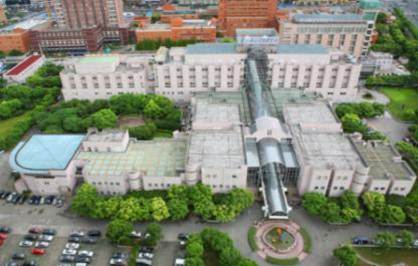
For the past ten years, I’ve visited my Shanghai “home,” also known as the Shanghai Children’s Medical Center, at least once a year. I have watched the hospital grow, develop and mature into the world’s #1 children’s hospital for pediatric cardiac surgery.

Last year, the dedicated surgeons at the SCMC, most of them trained through Project HOPE programs, performed more than 3,000 pediatric heart surgeries. To put this accomplishment into perspective, the largest program in the United States does nearly 1,000 pediatric heart surgeries in one year.

My Shanghai home has had many visitors. In 2009, more than 1.1 million children and their families walked through the doors for care at the SCMC. In addition, nearly 7,900 surgeries were performed on children.

Also, 44 children received bone marrow transplants at the SCMC – the highest number of any children’s hospital in China. And because more and more children from China and Asia are coming to the SCMC for cancer treatment, there will soon be a new addition to my Shanghai home – a seven-story oncology tower that will have more than 125 beds.

But that is just the beginning of the expansion plans now on the drawing board for my Shanghai home. My longtime friend, Jiang Zhongyi, Secretary of the Party Committee for the SCMC, shared with me an ambitious and visionary five-year plan for the hospital.

Over the next five years, the SCMC will continue to advance its three core programs in pediatric cardiology, pediatric oncology and hematology, as well as pediatric development and behavioral medicine. In addition, the hospital will expand its research capabilities and add another 500 clinical care beds. All this, with the goal of becoming China’s – if not Asia’s – leading children’s hospital by 2020.

When I think of “homes,” I often think of families. As my dear friend Mr. Jiang reminded me, Project HOPE and the SCMC are family.

Mr. Jiang then told me a touching story. He said that each new SCMC family member, whether they be a physician, nurse, technician or administrator, must visit the statue of Dr. William Walsh, Project HOPE’s founder, which sits on the SCMC grounds just next to the Cardiology Tower.

There the new family member reads this inscription, “Dr. William B. Walsh: Doctor, Teacher, and Friend to the World.” With that powerful and moving thought in mind, the new SCMC family member can then begin work at this very special institution.

Wednesday, September 22, 2010

Dedication Brings HOPE to Honduras

For more than 28 years – more than half of the 52 years Project HOPE has been in existence – HOPE has shared health education and humanitarian assistance with the people of Honduras. While we have made great strides in advancing health in this Central American nation, our work here is yet unfinished.

After Haiti, Honduras is the second poorest country in Latin America and the Caribbean region. Nearly 65 percent of Hondurans live in poverty. Forty-two percent are considered living in extreme poverty.

Despite the poverty, as I look into the faces and hear the voices of the Honduran people, I see and hear hope. A hope that Project HOPE is uniquely positioned to deliver. Why am I so optimistic about the future of HOPE in Honduras? Let me tell you why.

For 23 of the 28 years HOPE has been in Honduras, our current Country Director, Marco Antonio Suazo, has had his steady hand in our work here. From coordinating humanitarian relief efforts in response to the devastation from Hurricane Mitch in 1998, to overseeing a successful HIV/AIDS prevention program, to leading the successful Village Health Banks program, Marco has his eye focused and heart open to implementing the best possible health programs for his fellow Hondurans.

And Marco is not alone in his commitment to Honduras. The average tenure of HOPE’s senior leadership in Honduras is 18-20 years. And several of the “younger” HOPE staff members joined the HOPE family after graduating from our Village Health Banks – a testament that our micro-lending program is working in giving new opportunities to the women and their families who participate.

Along with the HOPE Honduras staff, I know another Honduran deeply dedicated to the health of his country – Honduras’s Minister of Health Dr. Arturo Bendana Pinel. How do I know this? I sat with Dr. Pinel in his office at 10 p.m. discussing what we could do together to make a difference in the lives of Hondurans.

In between his meetings with the President of Honduras and running a number of the country’s health care programs, Dr. Pinel still practices Obstetrics and Gynecology. He is very supportive of HOPE’s programs for women and children, and is particularly pleased with the success of our Village Health Banks program. I look forward to working with Dr. Pinel to address several of the country’s health challenges.

With a heavy heart, I leave Honduras. But I leave with confidence – in both the HOPE staff and in the Honduran health care leadership - that our work will continue to make a difference for years to come.

Now, it’s on to Nicaragua for the second chapter in my Central America visit.

John

Tuesday, September 21, 2010

Tortillas of HOPE and Health

I have traveled the world with Project HOPE. I have seen many of the world’s health challenges first hand. But today, I did something I’ve never done before in my life. I made a tortilla!

What does making a tortilla have to do with global health? Well, I made the tortilla with a new friend Candida. Candida is a grandmother and member of Project HOPE’s Village Health Banks, our micro-lending program. Like some of the women I introduced you to in yesterday’s blog, Candida’s life and health have changed because of the generosity of Joe and Teresa Long – major supporters of HOPE’s program in Honduras.

Candida is one of the hardest working women I know. She rises every day at 5:30 a.m. and makes more than 1,000 tortillas each day… seven days a week… 365 days a year. The math is easy. That’s more than 365,000 tortillas a year. In between making tortillas, Candida attends the health training provided by HOPE and makes sure her family and other women in her community benefit from her training.

Speaking of friends, today I met a courageous young man who is battling testicular cancer at the Emma Romero de Callejas National Cancer Center. Diego was in the last year of medical school when he was diagnosed with cancer. Diego is studying to be a pediatrician and shares my passion to help children through education and access to care. We made a promise that when Diego defeats his cancer, he will visit me at Project HOPE, and together we will make plans to help the children of Honduras.

While at the Cancer Center, I also met Dr. Flora Duarte who told me about a quiet crisis afflicting women in Honduras. Cervical cancer accounts for more than 23 percent of all cancers – the highest prevalence of any cancer in country. I was distressed by this information, but inspired by Dr. Duarte’s dedication to address the challenge. I assured Dr. Duarte that HOPE would explore intersections of interest among our many corporate partners to assist her in her efforts to make a difference in the lives of Honduran women.

During my visit to Honduras, I have been impressed by the dedication and determination of the country’s health professionals. Dr. Duarte and Dr. Hugo Godoy, the Hospital Director at Hospital Maria, a soon-to-be 178-bed children’s hospital on a hill overlooking Tegucigalpa, with whom I met today, both received advanced medical training in the United States. Yet both chose to return to Honduras to improve the lives of thousands in their home country. It is with dedicated health professionals like Drs. Duarte and Godoy that HOPE will be working with in the future to enhance health education and care for the people of Honduras.

Check back for more tomorrow,

John

Monday, September 20, 2010

Witnessing HOPE's Impact in Honduras

At the top of one of Tegucigalpa's seemingly countless hills, I met some of the most extraordinary and inspiring women. These exceptional women came from very humble circumstances and have built small businesses through their participation in Project HOPE's Village Health Banks micro-lending program.

I had the pleasure of meeting nearly 20 of these women to hear their inspirational stories. A woman named Pradith told me she was one of the original HOPE Village Health Bank members when the program started in Honduras 17 years ago. With her micro-loan, Pradith grew her business from selling fruit and candy on the street to now operating two small buffet-style restaurants and a fried chicken stand.

Two other women I met with shared something in common - both had had their lives changed because of a generous donation to support the Village Health Banks program from HOPE supporters Joe and Teresa Long. The first woman, Mirian, told me how she was able to save the money she made by selling clothes to pay for critical laboratory tests and an MRI scan for her daughter who suffers from epilepsy. Mirian had sought loans from other institutions to fund her business, but had always been turned down because she lived in a high-crime neighborhood. Through HOPE's Village Health Banks, Mirian found an organization that believed in her and gave her the confidence she needed, not to mention a low-interest loan - to help her fulfill her dream.

I then heard the incredible story of Yolanda - another beneficiary of the Long's generosity. Yolanda spends her entire day each Wednesday making tamales. Then beginning at 6 a.m. through 9 p.m. on Thursday, she sells her tamales to federal workers at the congressional offices in Tegucigalpa. Yolanda has five children. The loan she received helped her get her business off the ground. Now, with a gleam in her eye, she told me she can pay her bills and buy the food and medicines her children need to lead healthy lives.

Following my conversations with these exceptional women, I witnessed their dedication to the health of their community at a health fair they organized. More than 200 women and children in the El Carrizal community received eye exams and eyeglasses, breast and cervical cancer screenings, diabetes screenings and blood pressure checks.

The day ended at the HOPE office in Tegucigalpa where Pfizer Fellow Eduardo Heidelberg presented his recommendations on taking the Village Health Banks in Honduras to the next level. HOPE programs around the world have benefited from the knowledge and expertise of Pfizer employees who have graciously lent their talents to enhance the organization. Eduardo's keen insight and first-hand observations will contribute to the success of our Village Health Banks program for years to come.

Over the past 17 years, HOPE's micro-lending program has invested more than $40 million to help improve the lives of more than 24,000 women and their families. If only you could have seen the faces of the women and their families that I saw today. You would agree that this investment is paying dividends in healthier lives and stronger families. Not a bad investment.

Check back for more tomorrow,

John